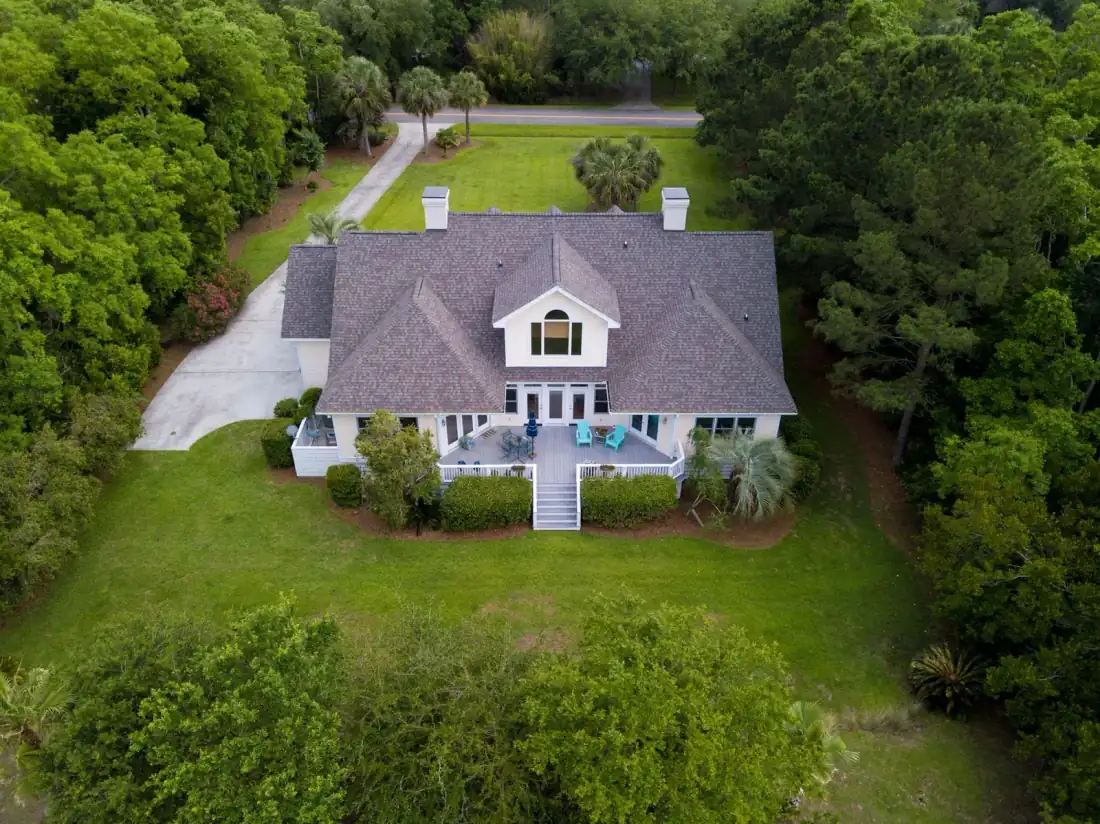
Custom Home Building
Custom Home Builder Services
Your dream home, built from the ground up.
Call (352) 710-5455Protech Construction Services is a licensed custom home builder based in Brooksville, FL, serving all of Hernando County, Pasco County, and Citrus County. We handle every phase of new residential construction, from lot evaluation and floor plan design through permitting, foundation, framing, finishing, and final certificate of occupancy. Every home we build meets current Florida Building Code wind load requirements, passes every county inspection, and is delivered on a timeline you can count on. Call (352) 710-5455 for a free consultation.
What It Actually Costs to Build a Custom Home in Hernando County
The most common question we hear is about cost, and the honest answer is that it depends on size, finishes, and site conditions. In Hernando County in 2026, custom home construction typically runs between $201 and $404 per square foot. That range covers everything from a straightforward 1,400-square-foot retirement home with builder-grade finishes to a 4,000-square-foot estate with premium materials, complex architectural details, and extensive outdoor living spaces.
For a practical example, a 2,000-square-foot custom home with mid-range finishes in Brooksville or Spring Hill would typically cost between $300,000 and $450,000 for the construction alone, not including land. That number includes foundation, framing, roofing, mechanical systems (HVAC, electrical, plumbing), insulation, drywall, interior and exterior finishes, cabinetry, countertops, flooring, fixtures, and basic landscaping.
What drives the final number up or down is the specifics. Impact-rated windows and doors, which are required by Florida Building Code in most configurations, add to the baseline cost but are non-negotiable for code compliance. Kitchen and bathroom finishes alone can account for 20 to 30 percent of the total build cost depending on whether you choose laminate countertops or natural stone, stock cabinets or custom-built cabinetry, and standard fixtures or designer-grade hardware.
Costs That Homeowners Often Underestimate
- Lot preparation: Site clearing, grading, fill dirt, and compaction can add $5,000 to $30,000 depending on the condition of the property, tree removal requirements, and whether the lot is in a flood zone that requires elevation
- Permitting and impact fees: Building permits in Hernando County typically cost $3,000 to $8,000 depending on the declared project value. Impact fees for new construction add to that total and vary by location within the county
- Utility connections: Connecting to county water and sewer, or installing a well and septic system, is a separate cost that ranges from $5,000 to $20,000+ depending on distance and system type
- Survey and engineering: A boundary survey, soil testing, and any required engineering reports (wind load calculations, flood zone determinations) typically run $2,000 to $5,000
- Driveway and final grading: Concrete or asphalt driveway, final grade, sod, and irrigation are often treated as separate line items that add $8,000 to $20,000
Land prices in Hernando County vary widely. As of early 2026, the median lot price is approximately $52,000 per acre, with buildable residential lots in established areas of Brooksville and Spring Hill ranging from $25,000 for smaller quarter-acre lots to $150,000+ for premium acreage with cleared pads and existing utility access. There are currently over 800 lots listed for sale across the county, which means you have options regardless of budget.
The Construction Process: Phase by Phase
Building a custom home is the largest financial commitment most families will ever make, and the process should never feel like a mystery. At Protech Construction, we walk you through every phase before we break ground, and we keep you informed with regular progress updates and on-site walkthroughs throughout the build. Here is what the process looks like from start to finish.
Phase 1: Design and Pre-Construction (1 to 3 Months)
- Initial consultation to discuss your goals, lot (or help evaluate potential lots), budget, and timeline
- Review existing architectural plans for constructability and code compliance, or design new floor plans in-house
- Prepare a detailed scope of work and line-item budget that breaks down every cost category
- Coordinate pre-construction tasks: soil testing, boundary survey, engineering calculations
- Submit permit application to Hernando County
You see exactly where your money goes before you sign a contract. If you need floor plans designed, we offer that service in-house or can coordinate with a licensed architect for more complex designs.
Phase 2: Permitting (15 to 30 Business Days)
Hernando County processes all building permit applications through their online Accela Citizen Access portal. We submit the complete application package:
- Architectural plans and floor plan drawings
- Structural engineering documents with wind load calculations
- Energy calculations for code compliance
- Zoning approval and flood zone determination
- Septic or sewer letter and environmental clearances (where applicable)
Residential construction permits in Hernando County typically take 15 to 30 working days for plan review and approval. We manage this entire process so you do not have to interact with the building department at all.
Phase 3: Site Preparation and Foundation (2 to 4 Weeks)
- Lot clearing, grading, and compaction to create a stable building pad
- Underground plumbing and electrical conduit installation
- Foundation pour (monolithic slab-on-grade for most Hernando County homes, or stem wall for flood zone properties)
- County foundation inspection: rebar placement, slab thickness, anchor bolt locations, compliance with engineering plans
Properties in flood zones may require elevated foundations or stem wall construction, which adds cost and time but is required by FEMA regulations and county code. No framing begins until the foundation inspection passes.
Phase 4: Framing (4 to 8 Weeks)
- Wall framing (concrete block or engineered wood-frame)
- Roof truss installation with hurricane clips at every connection point
- Roof sheathing, underlayment, and secondary water barrier
- Window and door rough openings
- County framing inspection: structural connections, sheathing nailing patterns, wind load compliance
This is when your home takes physical shape. You can walk through the structure for the first time and see the actual room sizes, window placements, and ceiling heights. Florida Building Code requires design wind speeds of 130 to 140 mph in Hernando County, so every truss connection, wall-to-foundation anchor, and roof-to-wall strap must meet engineered specifications.
Phase 5: Mechanical Rough-Ins (2 to 3 Weeks)
- Electrical wiring and panel installation
- Plumbing supply and drain lines
- HVAC ductwork and equipment placement
- Low-voltage wiring (network, cable, security, smart home pre-wire)
- Impact-rated window and exterior door installation
- Separate county inspections for each trade before insulation can proceed
Phase 6: Insulation, Drywall, and Interior Finishes (6 to 10 Weeks)
After all rough-in inspections pass, the finishing sequence begins:
- Insulation installation (blown-in or batt, meeting current energy code R-values)
- Drywall hang, tape, and finish
- Interior painting (walls, ceilings, trim)
- Cabinet installation (kitchen, bathrooms, laundry)
- Countertop templating, fabrication, and installation
- Plumbing fixture connections (sinks, faucets, toilets, showers)
- Flooring installation (tile, hardwood, LVP)
- Trim carpentry (baseboards, crown molding, door casing)
- Electrical fixtures (switches, outlets, lighting, ceiling fans)
- Appliance installation
This is the longest phase because each step depends on the previous one. Cabinets before countertops. Countertops before plumbing connections. Paint before flooring. Managing this sequence efficiently is one of the most important things a general contractor does.
Phase 7: Final Inspections and Walkthrough (1 to 2 Weeks)
- Final building inspection
- Final electrical inspection
- Final plumbing inspection
- Final mechanical (HVAC) inspection
- Detailed walkthrough with you to identify any punch list items
- Punch list completion
- Certificate of occupancy (CO) issued by Hernando County
Once the CO is issued, the home is legally ready for occupancy.
What We Build
- Single-family custom homes from 1,200 to 5,000+ square feet
- Energy-efficient construction with impact-rated windows, doors, and current-code insulation
- Open-concept floor plans designed for Florida's indoor-outdoor lifestyle
- Custom kitchens with your choice of cabinetry, countertop materials, and appliance packages
- Master suites with walk-in closets and spa-style bathrooms
- Screened-in porches, lanais, covered patios, and outdoor living spaces
- Attached and detached garages (2-car and 3-car configurations)
- Multi-generational floor plans with separate living quarters
- Energy Star and Florida Green Building Coalition certified homes on request
Hurricane Code Compliance Is Not Optional
Florida has the strictest residential building codes in the United States, and for good reason. Every custom home we build meets or exceeds the current Florida Building Code requirements for wind resistance, which in Hernando County means designing and building to withstand sustained wind speeds of 130 to 140 mph depending on location and proximity to the coast.
The Florida Building Code classifies wind zones statewide. Hernando County falls primarily in Wind Zone 1 (130 mph or above basic wind speed) and Wind Zone 2 (140 mph or above) in areas closer to the Gulf coast. These classifications determine the engineering requirements for every structural connection in your home.
In practical terms, every home we build includes:
- Engineered roof trusses with hurricane clips at every connection point
- Continuous load path strapping from the roof structure through the walls to the foundation
- Impact-rated windows and doors (or approved hurricane shutter systems) on all glazed openings
- Reinforced garage doors rated for the local wind zone
- Concrete block or engineered wood-frame walls with code-compliant sheathing and nailing patterns
- A secondary water resistance barrier under the roof covering for additional protection against wind-driven rain
The concept of a "continuous load path" is central to Florida hurricane construction. When wind pushes against a building, the forces travel from the roof through the walls to the foundation. If any connection in that path fails, the structure can come apart. Hurricane clips (metal connectors that attach each roof truss to the top plate of the wall) are the most critical link. We install clips at every single truss-to-wall connection, not just at the end walls as some builders do to save money. The difference in material cost is minimal, but the difference in structural performance during a hurricane is significant.
Impact-rated windows are another non-negotiable element. Florida Building Code requires that all glazed openings in the building envelope either be impact-resistant or be protected by approved shutters. Impact-rated windows use laminated glass (two layers of glass bonded to an inner plastic membrane) that holds together when struck by flying debris. They also provide superior thermal performance, noise reduction, and UV protection compared to standard windows. We install impact-rated windows as our standard specification because they provide permanent protection without requiring homeowners to deploy and store hurricane shutters every storm season.
These requirements add to the cost of construction compared to building in states with less demanding codes, but they are what make Florida homes survivable in hurricanes. They also provide direct financial benefits through wind mitigation insurance credits and lower energy bills. We never cut corners on structural integrity, and we never suggest alternatives that compromise code compliance to save money.
Energy Efficiency in New Construction
Building new gives you the opportunity to incorporate energy efficiency from the ground up rather than retrofitting an existing home. The current Florida energy code requires specific performance benchmarks for insulation, window ratings (U-factor and Solar Heat Gain Coefficient), HVAC efficiency, and building envelope air sealing.
Impact-rated windows, which are already required by building code in most configurations, also provide excellent thermal performance. Low-E coatings on the glass reduce solar heat gain, which directly lowers cooling costs in a climate where air conditioning runs eight to ten months per year. On a 2,000-square-foot home, the difference between standard single-pane windows and modern Low-E impact windows can reduce annual cooling costs by $800 to $1,500.
We can also incorporate additional energy-saving features as part of the original build at a fraction of what they would cost as retrofits:
- Solar-ready wiring and conduit (so panels can be added later without opening walls)
- Tankless water heaters (endless hot water, 20 to 30 percent less energy than tank systems)
- High-SEER HVAC systems (16+ SEER for maximum efficiency in Florida's cooling-dominant climate)
- LED lighting throughout with smart switches and dimmers
- Smart home pre-wiring (network drops, security system, smart thermostat, doorbell camera)
- Spray foam insulation in attic and exterior walls (superior R-value and air sealing compared to batt insulation)
Production Builder vs. Custom Builder: Understanding the Difference
Hernando County has several builders to choose from, and understanding the difference between production builders and custom builders helps you make the right choice for your situation.
Production builders (also called tract builders or volume builders) build from a set catalog of floor plans in their own subdivisions. Companies like Quality Family Homes, D.R. Horton, and Lennar operate in the Hernando County market. You pick a floor plan from their catalog, choose from a curated selection of finishes (usually three tiers: standard, upgraded, and premium), and the home is built on their schedule in their subdivision. The advantages are speed (production builders often complete homes in 4 to 6 months because they build the same plans repeatedly), predictability (the price is mostly fixed upfront), and lower cost per square foot ($150 to $250/SF is typical for production homes). The tradeoff is that you get their design, not yours. Customization options are limited, and you build where they build, not where you want to live.
Custom builders like Protech work on your lot, with your plans, on your timeline. You choose every material, every finish, every fixture. The home is designed around how your family actually lives rather than around what is most efficient for the builder to construct repeatedly. The advantages are complete control over design, location flexibility (build anywhere you own land), and a one-of-a-kind result. The tradeoffs are longer timelines (8 to 14 months is typical), higher cost per square foot ($201 to $404/SF), and more decisions to make throughout the process.
Neither approach is inherently better. If you want a home quickly in an established subdivision with minimal decision-making, a production builder is the right choice. If you want a home designed specifically for your family on a lot you have chosen, with control over every detail, a custom builder is what you need.
Why Build with Protech Construction
As a local Brooksville-based contractor, Protech Construction brings specific advantages to custom home building in Hernando County that out-of-area builders cannot match.
We know the local building department. Hernando County has its own permitting quirks, inspection expectations, and plan review preferences. We have been through the process enough times to know what reviewers look for, how to prepare applications that move through review efficiently, and who to call when a question arises. This knowledge translates directly to shorter permit timelines for our clients.
We have established supplier relationships. Local lumber yards, concrete suppliers, window and door distributors, and material suppliers give better pricing and faster delivery to contractors they work with regularly. We do not source materials from big-box stores. We use suppliers who stock the specific products that perform well in our climate and meet Florida Building Code requirements.
We are accountable because we live here. Our office is at 9035 Jayson Dr in Brooksville. We are not a company that drives in from Tampa or Orlando, builds your home, and disappears. We live and work in the same community where we build, which means our reputation is on the line with every project. You can drive by our office any time, and if you have a question six months after your home is complete, we are a local call away.
Our subcontractors are local and vetted. The quality of a custom home depends heavily on the quality of the subcontractors who do the electrical, plumbing, HVAC, tile, painting, and other specialized work. We work with the same team of local, licensed subcontractors on every project. They know our standards, our scheduling expectations, and our quality requirements. This consistency translates to better workmanship and fewer delays.
Foundation Types in Florida
The foundation is the most important structural element of your home, and in Florida, the right foundation type depends on your lot conditions, flood zone designation, and budget.
Monolithic Slab-on-Grade
This is the standard foundation type for residential construction in Hernando County and most of Central Florida. A monolithic slab is a single pour of concrete that forms both the footer and the floor slab in one continuous piece. It typically costs $4,500 to $12,000 for a standard residential home. Slab-on-grade foundations are faster to build, more affordable, and provide excellent thermal mass for energy efficiency in Florida's climate. The downside is that plumbing lines are buried under the slab, making future plumbing modifications more difficult and expensive (requiring concrete cutting).
Stem Wall Foundation
A stem wall foundation uses a continuous concrete footer with a short wall (the stem) that raises the floor level above grade. The space between the ground and the floor can be left as a crawl space or filled and topped with a poured slab. Stem wall foundations cost $8,000 to $21,000, roughly double the cost of a monolithic slab. The advantage is elevation control: you can raise the finished floor height above the base flood elevation without relying entirely on fill dirt, and you retain easier access to plumbing and electrical underneath the floor. Stem wall foundations are the standard choice for properties in flood zones where the finished floor must be elevated above the FEMA Base Flood Elevation (BFE).
We evaluate soil conditions and flood zone requirements during the lot evaluation phase and recommend the appropriate foundation type for your specific property. In Hernando County, the water table can sit surprisingly close to the surface in some areas, and soil conditions vary significantly between sandy upland lots and clay-heavy lowland properties. A soil test (typically $300 to $800) provides the data we need to design the right foundation.
Insurance Advantages of New Construction
One of the most significant financial advantages of building a new home in Florida is the insurance cost savings compared to older homes. The average Florida homeowners insurance premium in 2026 ranges from $3,240 to $4,500 per year, but homes built to current Florida Building Code standards qualify for substantial wind mitigation discounts that can reduce the windstorm portion of the premium by 30 to 40 percent.
Every home we build automatically qualifies for multiple wind mitigation credits because we build to current code:
- Hip roof geometry (performs better in high winds than gable roofs)
- Secondary water resistance barrier under the roof covering
- Code-compliant roof-to-wall connections (hurricane clips at every truss)
- Impact-rated windows and doors on all openings
- Reinforced garage doors rated for the local wind zone
These features are documented on the Florida wind mitigation inspection form, which your insurance company uses to calculate your premium.
As of April 2026, Florida implemented a major overhaul of the wind mitigation inspection form with more precise evaluation categories. Homes built to the latest code standards will benefit the most from the updated credit structure. A new construction home built by Protech Construction arrives with all wind mitigation features already in place, which means maximum insurance discounts from day one.
The insurance savings on a new construction home versus a pre-2002 home can be $1,000 to $2,500 per year or more, depending on location and coverage levels. Over a 30-year mortgage, that translates to $30,000 to $75,000 in cumulative savings, which is a significant offset to the upfront cost of building new.
Build on Your Lot
We build on lots you already own or help you evaluate lots you are considering purchasing. Lot evaluation is a critical step that many homeowners skip. Not every lot is buildable without significant additional cost. We check for flood zone designation (FEMA zones A, AE, X, and VE all have different requirements), soil conditions (sandy vs. clay, water table depth), setback requirements (front, side, and rear yard minimums vary by zoning district), zoning restrictions (some areas have minimum square footage requirements, height limits, or architectural review boards), utility access (distance to county water, sewer, or the need for well and septic), and tree preservation requirements (Hernando County has specific tree protection ordinances for certain species and sizes).
Our free lot evaluation checks for:
- Flood zone designation (FEMA zones A, AE, X, and VE all have different elevation and construction requirements)
- Soil conditions (sandy vs. clay, water table depth, bearing capacity)
- Setback requirements (front, side, and rear yard minimums vary by zoning district)
- Zoning restrictions (minimum square footage, height limits, architectural review boards)
- Utility access (distance to county water and sewer, or need for well and septic)
- Tree preservation requirements (Hernando County has specific protection ordinances for certain species and sizes)
- Easements and right-of-way encumbrances
This evaluation can save you tens of thousands of dollars by identifying problems before you close on the land. We have seen homeowners purchase lots only to discover that flood zone elevation requirements would add $40,000 to their build cost, or that the lot did not have sewer access and required a $15,000 septic system installation. A 30-minute site visit with us before your land purchase can prevent these surprises.
Financing Your Custom Home
Custom home construction is typically financed through a construction-to-permanent loan, which provides funds in draws during the building process and then converts to a traditional mortgage once the home is complete. Most lenders require 20 to 25 percent down for a construction loan, though some programs allow as little as 10 percent for qualified borrowers.
The construction loan process requires a detailed budget, approved plans, and a fixed-price contract with a licensed general contractor. We provide all of the documentation your lender needs, including a detailed draw schedule that aligns with the construction phases. We have worked with most local lenders and credit unions in the Hernando County area and can recommend financing sources if you do not already have a lender.
For veterans, VA construction loans are available with zero down payment, though they require a VA-approved builder and additional documentation. FHA construction loans (FHA 203(k)) are another option for borrowers with lower down payment capacity, though they come with additional requirements and inspection protocols. We are experienced with both programs and can guide you through the process.
By City
Custom Home Building near you
Service Areas
Custom Home Building across Central Florida
Licensed and insured, working throughout Hernando, Pasco, and Citrus counties.
FAQ
Frequently Asked Questions
How long does it take to build a custom home in Hernando County?
+
How much does it cost to build a custom home in Hernando County?
+
Do you provide floor plans or do I need an architect?
+
What areas do you build custom homes in?
+
Are you licensed and insured?
+
Do you handle the permit process?
+
Can you help me evaluate a lot before I buy it?
+
What is included in the cost per square foot?
+
Construction Knowledge
Articles and guides for Central Florida homeowners
Concrete Block vs Wood Frame in Florida: Cost, Wind Rating and Insurance for Your Custom Build
Block or wood frame is the first structural decision on a Florida custom home. Here is how the two compare on cost, wind performance, insurance, termites, moisture and energy, and which one fits your build.
Read Article
Elevated and Piling Home Cost in Florida: 2026 Guide
The flood zone tells you how high the floor has to be. It does not tell you what that height costs, and the numbers floating around the internet are off by a factor of three. Stem wall runs about $5 per square foot over slab on grade. A complete piling foundation runs $50,000 to $90,000, which on a 2,400 square foot home is closer to $31 per square foot than the $100 to $150 figure commonly quoted. Here is the honest breakdown, foundation by foundation.
Read ArticleBuilding a House in a Florida Flood Zone: 2026 Guide
A flood zone does not decide whether a Nature Coast lot is buildable. It decides one number, the required elevation, and everything else follows from it. Here is the sequence a permit reviewer walks, from reading the FIRM panel to the insurance math that makes a foot of voluntary freeboard worth roughly $12,000 over a 30-year mortgage.
Read ArticleReady to Build?
Get your free evaluation today.
No-pressure consultation. We serve Hernando, Pasco, and Citrus counties. Call us now or request a visit online.