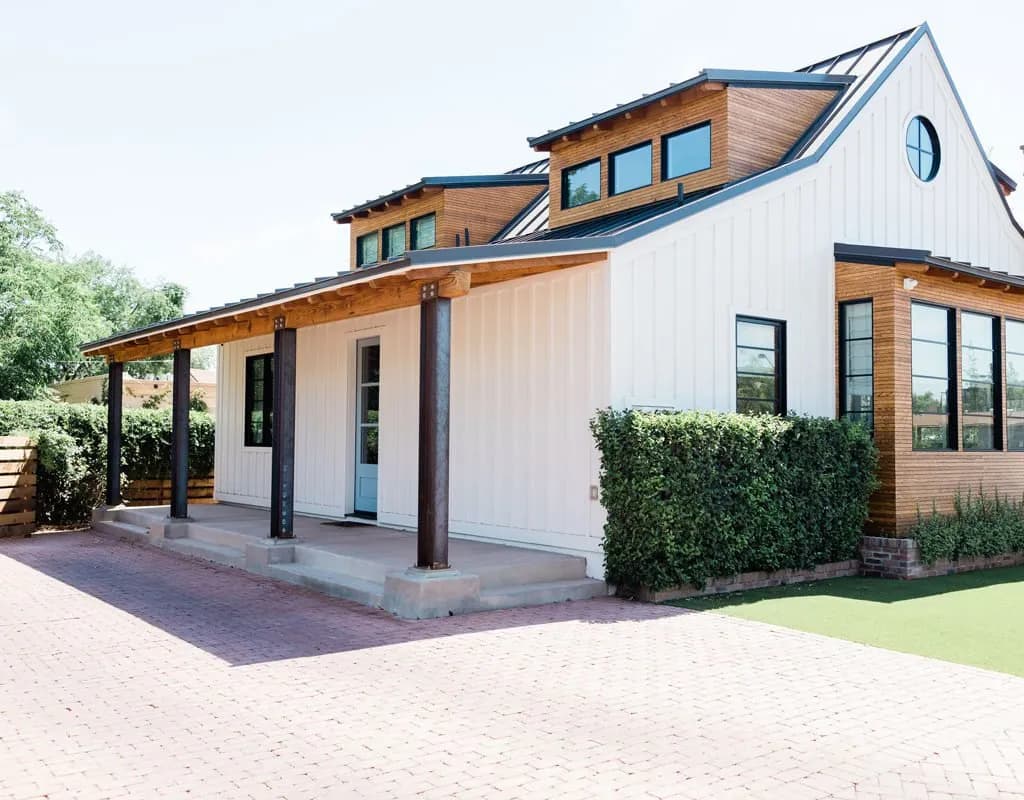
Protech Construction builds home additions across Hernando, Pasco, and Citrus counties. Whether you need an extra bedroom, a larger living area, a garage, a sunroom, or a screened porch, we handle design, structural engineering, permitting, and construction from start to finish. Every addition we build integrates structurally with your existing home, matches your roofline and exterior finishes, and meets current Florida Building Code wind load requirements. Call (352) 710-5455 for a free on-site evaluation.
Home Addition Costs in Central Florida
Home additions in Florida typically cost between $150 and $300 per square foot for fully finished, climate-controlled living space. That range includes foundation, framing, roofing, mechanical systems, insulation, drywall, finishes, and the structural tie-in to your existing home. Total project cost depends on the type and size of the addition:
- Screened porch (basic): $5,000 to $15,000 for a standard screen enclosure over an existing concrete patio. $50 to $100 per square foot for a new structure with concrete pad, framing, and screen
- Screened porch (upgraded): $15,000 to $30,000 for a larger screened room with knee walls, ceiling fan, lighting, and electrical outlets
- Three-season sunroom: $10,000 to $40,000 ($150 to $350 per square foot). Windows on three sides, insulated roof, ceiling fan, lighting. Not air-conditioned
- Four-season sunroom (Florida room): $20,000 to $80,000 ($250 to $450 per square foot). Fully insulated, air-conditioned, with impact-rated windows. Functions as year-round living space
- Bedroom addition: $25,000 to $60,000 depending on size, closet configuration, and whether an en-suite bathroom is included
- Bathroom addition: $20,000 to $50,000 depending on size and finish level
- Family room / great room expansion: $35,000 to $80,000 depending on square footage
- Garage addition (attached, 2-car): $25,000 to $55,000 for a basic attached garage. More for finished interiors, storage systems, or workshop areas
- In-law suite / ADU: $50,000 to $120,000+ for a self-contained living space with separate entrance, bathroom, and kitchenette
These costs reflect 2026 pricing in Hernando, Pasco, and Citrus counties. Labor accounts for 40 to 60 percent of the total, with the remainder covering materials, permits, and engineering.
The 50 Percent Rule: A Critical Florida Requirement
Florida Building Code includes a provision that affects many addition projects: if the cost of your improvement exceeds 50 percent of the building's assessed value, the entire structure (not just the addition) must be brought up to current building code. This can significantly increase the scope and cost of a project on an older home.
For example, if your home is assessed at $180,000 and you plan a $100,000 addition, the cost exceeds 50 percent of the assessed value. In that scenario, your existing windows, roof connections, and structural elements may need to be upgraded to meet current wind load requirements, even though they are not part of the addition itself.
We evaluate this during the initial consultation and inform you upfront if the 50 percent rule applies to your project. This is one of the most important things to understand before committing to a large addition on an older Florida home.
Types of Additions We Build
Room Additions
A room addition adds new square footage to your home's footprint. This is the most common type of addition and can be configured as a bedroom, bathroom, family room, home office, or any combination. Room additions require a new foundation (typically slab-on-grade in Florida), framing that ties into your existing roof structure, and extension of all mechanical systems (HVAC, electrical, plumbing).
The most challenging part of a room addition is the structural tie-in to the existing home. New roof trusses or rafters must be "tied in" to the existing roofline, which involves removing sections of the old roof to weave the new structure into the old, creating a waterproof valley or ridge connection. This work requires structural engineering and precise execution to prevent leaks and ensure the combined structure meets wind load requirements.
Screened Porches and Lanais
Screened porches are one of the most popular additions in Florida because they provide outdoor living space that is usable year-round without dealing with mosquitoes, no-see-ums, and other insects. A basic screen enclosure over an existing concrete patio is the most affordable option. A new screened porch with concrete pad, aluminum or wood framing, insulated roof, ceiling fans, and lighting provides a more substantial outdoor room.
Sunrooms and Florida Rooms
A sunroom (Florida room) is a fully enclosed addition with windows on multiple sides designed to bring in natural light while providing climate-controlled comfort. Three-season sunrooms have single-pane windows and are not air-conditioned, making them comfortable in spring and fall but warm in summer. Four-season sunrooms are fully insulated with impact-rated windows and connected to the HVAC system, functioning as year-round living space.
The average Florida room addition costs around $35,000, but prices range from $10,000 for a simple three-season room to $80,000 for a large four-season room with premium windows and high-end finishes. ROI on a Florida room addition is typically 50 to 60 percent at resale.
Garage Additions
Adding a garage to a home that does not have one, or adding a second bay to an existing single-car garage, is a common project in Hernando County where many older homes were built without garages. Attached garage additions require foundation work, framing, roofing, and a connection to the existing structure. We match the roofline and exterior finishes so the garage looks like an original part of the home.
In-Law Suites and Accessory Dwelling Units (ADUs)
In-law suites provide independent living space for family members while keeping them close. These additions typically include a bedroom, full bathroom, kitchenette, and separate entrance. Depending on local zoning, they may qualify as Accessory Dwelling Units (ADUs), which are subject to specific setback and utility requirements.
Florida passed legislation in 2023 that expanded ADU rights statewide, requiring local governments to allow ADUs in residential zones under certain conditions. However, specific requirements vary by county. In Hernando County, ADU regulations address:
- Maximum square footage relative to the primary dwelling
- Setback requirements from property lines
- Parking requirements for the additional unit
- Utility connection requirements (separate meter vs. shared)
- Owner-occupancy requirements (whether the property owner must live in one of the units)
- Rental restrictions (if any)
We research zoning requirements during the evaluation phase and confirm ADU compliance with the Hernando County Zoning Division before beginning design work.
Second-Story Additions
Adding a second story is the most complex type of home addition because it requires the existing first-floor structure and foundation to support the additional load. Not every home can accommodate a second story without significant structural upgrades to the existing foundation and walls.
The evaluation process for a second-story addition includes:
- Structural assessment of the existing foundation (can it support the additional load?)
- Evaluation of existing wall framing (is it adequate for two-story loads?)
- Soil bearing capacity testing (will the soil support the increased foundation load?)
- Engineering design for the new second floor, stairway, and structural reinforcements
- Assessment of the existing roof structure (it will be removed and rebuilt)
Second-story additions typically cost $200 to $350 per square foot, which is higher than ground-level additions due to the structural complexity, temporary shoring requirements, and the need to remove and rebuild the roof. Timeline is 4 to 7 months for construction. We provide a preliminary feasibility assessment during the initial evaluation before committing to a full engineering study.
Addition vs. Remodel: Making the Right Choice
Sometimes the space you need already exists in your home but is being used inefficiently. Before committing to a costly addition, consider whether a remodel could achieve the same result:
- Need a home office? Converting an underused formal dining room or spare bedroom may be more cost-effective than adding new square footage
- Need a bigger kitchen? Removing the wall between the kitchen and dining room often creates more usable space than adding onto the back of the house
- Need a bigger master bathroom? Borrowing space from an adjacent closet or bedroom can expand the bathroom without adding to the building footprint
- Need a bigger garage? Sometimes a garage organization system or overhead storage provides the functional space you need without the cost of a garage addition
We evaluate both options during the initial consultation and give you an honest recommendation about which approach delivers the best value for your specific situation. Sometimes the answer is an addition. Sometimes it is a creative remodel. And sometimes it is a combination of both.
Structural Engineering and Code Compliance
Every home addition in Florida requires engineered plans signed and sealed by a Florida registered engineer or architect. The engineering documents address:
- Wind load calculations for the new structure and its connection to the existing home
- Foundation design (type, depth, reinforcement)
- Roof-to-wall and wall-to-foundation connection details
- Load path continuity (hurricane clips, straps, anchor bolts)
- Header sizing for new openings between the addition and the existing home
We coordinate the engineering, submit the plans to Hernando County for permit review, and manage all inspections throughout construction. The permit review process for additions typically takes 15 to 30 business days.
Matching the Existing Home
A well-built addition should look like it was always part of the house. This means matching every exterior detail:
- Roof pitch angle (measured in rise over run, e.g., 5/12, 6/12)
- Roofing material, color, and manufacturer
- Siding material, profile, and color
- Window style, frame color, and grid pattern
- Soffit and fascia dimensions, material, and color
- Exterior trim profiles and paint colors
- Gutter style and downspout locations
We document all existing exterior materials during the evaluation and source matching products before construction begins. If an exact match is not available (common with older stucco textures or discontinued siding profiles), we work with you to find the closest alternative or plan a blending strategy that minimizes visual differences.
HVAC and Electrical Considerations for Additions
Adding square footage to your home without addressing HVAC and electrical capacity is a common mistake that leads to comfort problems and code violations.
HVAC Sizing
Your existing HVAC system was sized for the original square footage of your home. Adding a room, sunroom, or garage conversion without resizing the system means the AC will run longer, struggle to maintain temperature in the new space, and wear out faster. In Florida, where the HVAC system runs 8 to 10 months per year, an undersized system is not just uncomfortable, it is expensive.
For smaller additions (under 300 square feet), extending existing ductwork may be sufficient if the current system has spare capacity. For larger additions, a mini-split system (ductless AC unit dedicated to the new space) is often the most cost-effective solution, running $3,000 to $6,000 installed. For very large additions, the existing system may need to be replaced with a larger unit, or a separate system may be required for the addition.
Electrical Panel Capacity
Older Florida homes often have 100-amp or 150-amp electrical panels that are already near capacity. Adding rooms with lighting, outlets, and potentially a mini-split system may require a panel upgrade to 200 amps, which typically costs $1,500 to $3,000. We evaluate panel capacity during the design phase and include any necessary upgrades in the project scope.
Addition Timeline: What to Expect
The timeline for a home addition depends on the type and complexity of the project. Here are realistic timeframes for the most common addition types, including design, permitting, and construction:
- Screen enclosure over existing patio: 1 to 2 weeks construction (minimal permitting)
- New screened porch with concrete pad: 3 to 5 weeks construction, plus 3-4 weeks for design and permitting
- Three-season sunroom: 4 to 6 weeks construction, plus 4-6 weeks for design, engineering, and permitting
- Four-season sunroom (Florida room): 6 to 10 weeks construction, plus 4-6 weeks for design, engineering, and permitting
- Bedroom addition (no bathroom): 8 to 12 weeks construction, plus 4-6 weeks for design, engineering, and permitting
- Bedroom + bathroom addition: 10 to 14 weeks construction, plus 4-6 weeks for design, engineering, and permitting
- Garage addition (attached): 6 to 10 weeks construction, plus 4-6 weeks for design, engineering, and permitting
- In-law suite / ADU: 12 to 20 weeks construction, plus 6-8 weeks for design, engineering, and permitting
Permitting in Hernando County adds 15 to 30 business days for plan review on all permitted additions. Engineering adds 1 to 3 weeks depending on complexity. We overlap design, engineering, and permitting phases as much as possible to minimize the total pre-construction timeline.
Florida-Specific Addition Considerations
Flood Zone Impact
If your home is in a FEMA flood zone (Zone A, AE, or VE), any addition that increases the footprint of the structure must comply with flood zone construction requirements. This typically means the lowest floor of the addition must be at or above the Base Flood Elevation (BFE), which may require elevated foundations and adds to the project cost.
Setback Requirements
Every lot in Hernando County has setback requirements that dictate how close a structure can be built to each property line. Front, side, and rear setbacks vary by zoning district. Before designing an addition, we verify your lot's zoning and setbacks to ensure the proposed addition fits within the buildable area. Some older homes were built close to setback lines, which limits where an addition can go.
Impact on Property Taxes
Adding permitted square footage to your home will increase the assessed value and therefore the property taxes. The increase depends on the value of the addition relative to the existing home value. In Hernando County, the property appraiser will reassess the property after a building permit is finalized. This is a factor to consider in your long-term cost analysis, though the added value to the property typically far exceeds the incremental tax increase.
Hurricane Code for Additions
Every addition must meet current Florida Building Code wind load requirements, regardless of when the original home was built. This means impact-rated windows, hurricane clips on all roof connections, and engineered structural connections between the addition and the existing home. The addition will be built to a higher standard than much of the existing home if the home was built before the 2002 code changes.
Insurance Impact
A well-built addition can actually improve your insurance situation. Adding impact-rated windows on the addition (required by code) may qualify you for wind mitigation credits if the addition represents a significant portion of the home's total glazed area. The additional square footage will increase your dwelling coverage requirement, which your insurance agent should be notified about once the addition is complete and the certificate of occupancy is issued. We recommend contacting your insurance agent before starting the project to understand the coverage implications.
Common Home Addition Mistakes to Avoid
After building many additions in Hernando County, we have seen the same mistakes repeat. Avoiding these upfront saves money, time, and frustration:
Not Checking Setbacks Before Designing
Every lot in Hernando County has setback requirements that limit how close you can build to each property line. If you design a 400-square-foot addition on the back of your house without checking the rear setback, you may discover the addition encroaches into the required setback zone and cannot be permitted. We verify setbacks at the very beginning of the design process to ensure the addition fits within the buildable area.
Underestimating the HVAC Impact
Adding 300+ square feet without addressing HVAC capacity results in a system that cannot cool the expanded space. In Florida, this means the new room will be uncomfortably warm in summer, and the existing system will run longer and harder, increasing your energy bills and shortening the life of the equipment. We evaluate HVAC capacity on every addition project and include resizing, ductwork extensions, or supplemental mini-split systems in the scope as needed.
Choosing the Cheapest Option
A screened porch built with the cheapest aluminum framing and standard mesh will need re-screening within 5 to 7 years and may not withstand a moderate tropical storm. A room addition built with the minimum code requirements and builder-grade finishes will function but may feel out of character with the rest of the home. We design additions that match the quality level of the existing home and are built to last, not just built to pass inspection.
Not Planning for Electrical and Plumbing
Even a simple screened porch benefits from electrical outlets, lighting, and a ceiling fan. A sunroom needs HVAC, lighting, and outlets. A bedroom addition needs circuits, outlets on every wall, and closet lighting. Planning these utilities into the design from the start costs far less than running them after the addition is built and finished.
Ignoring the View from Inside
An addition changes how the rest of the home looks and functions. A room addition on the back of the house may block the kitchen window's natural light. A garage addition on the side may eliminate the dining room's view of the yard. We evaluate the impact of every addition on the existing home's livability, not just the new space being added.
Why Protech Construction for Your Home Addition
Home additions are among the most complex residential construction projects because they involve integrating new construction with an existing structure. The roof tie-in, foundation connection, exterior material matching, and HVAC integration all require experience and precision. A poorly executed addition looks bolted on. A well-executed addition looks like it was always part of the home.
As a licensed general contractor based in Brooksville, we bring local knowledge of Hernando County's building codes, zoning requirements, and inspection expectations to every addition project. We coordinate the engineering, manage the permitting, build the structure, and integrate every system so the addition is indistinguishable from the original home. Our one-year workmanship warranty covers every aspect of the addition, and our local presence means we are a phone call away if any issue arises after the project is complete.
By City
Home Additions near you
Service Areas
Home Additions across Central Florida
Licensed and insured, working throughout Hernando, Pasco, and Citrus counties.
FAQ
Frequently Asked Questions
How much does a home addition cost in Hernando County?
+
Do I need a permit for a home addition?
+
Can you match the existing exterior of my home?
+
How long does it take to build a home addition?
+
What is the 50 percent rule?
+
Can I add a second story to my home?
+
Construction Knowledge
Articles and guides for Central Florida homeowners
Screened Porch Additions in Florida: Real Costs for an Attached Screen Room, Not a Pool Cage
Three contractors can quote a screened porch $30,000 apart and all be honest, because they are pricing three different projects. Here is what a roofed screened porch addition really costs in Florida, where the roof tie-in decides the budget, and when a screen room is the better buy.
Read Article
Elevated and Piling Home Cost in Florida: 2026 Guide
The flood zone tells you how high the floor has to be. It does not tell you what that height costs, and the numbers floating around the internet are off by a factor of three. Stem wall runs about $5 per square foot over slab on grade. A complete piling foundation runs $50,000 to $90,000, which on a 2,400 square foot home is closer to $31 per square foot than the $100 to $150 figure commonly quoted. Here is the honest breakdown, foundation by foundation.
Read Article
Multigenerational Home Layouts in Florida: 6 Plan Moves
Nearly every production floor plan in Central Florida is a split-bedroom 3/2 designed for a nuclear family, and dropping three generations into it fails in predictable places: one shared wall, two bathrooms, one thermostat, and a great room that everyone has to walk through. Here are the six plan decisions that actually buy privacy, what each one adds to a build budget, and the single line in Florida statute that turns a suite into a second dwelling unit.
Read ArticleReady to Build?
Get your free evaluation today.
No-pressure consultation. We serve Hernando, Pasco, and Citrus counties. Call us now or request a visit online.