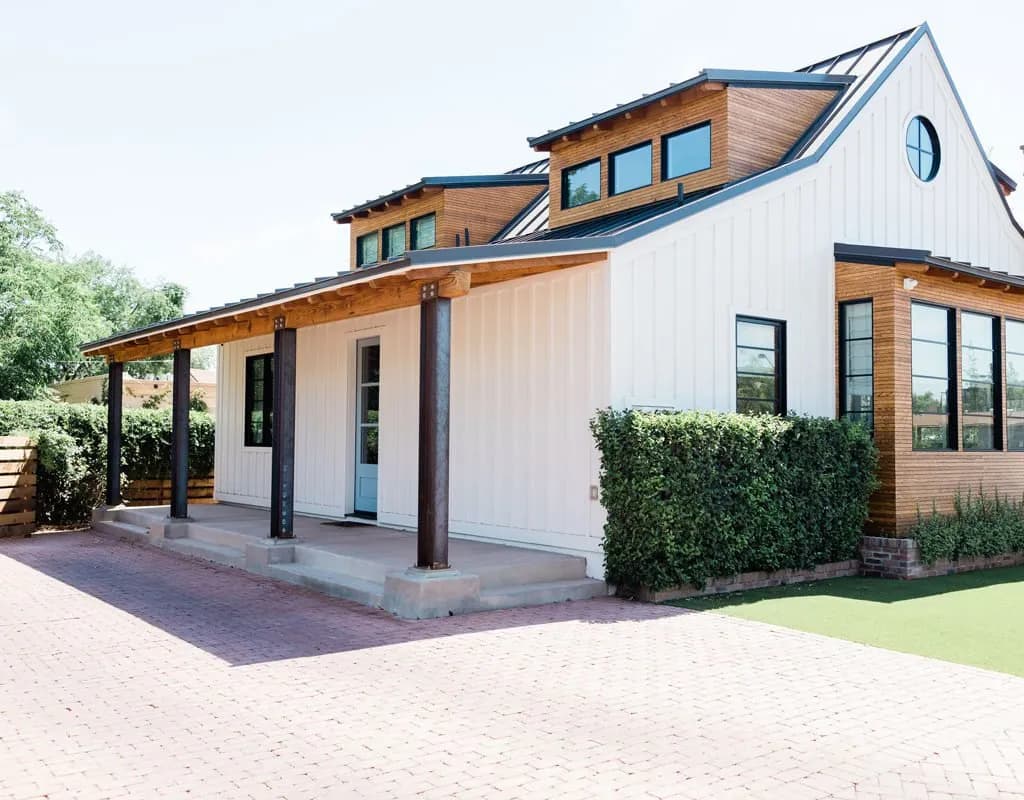
Home Additions · Spring Hill, FL
Home Additions in Spring Hill, FL
Home additions in Spring Hill, FL. Room additions, sunrooms, in-law suites for Timber Pines, Seven Hills. Licensed CBC1268979.
Call (352) 710-5455Protech Construction builds home additions for Spring Hill homeowners from our office in nearby Brooksville. With the community's projected housing deficit of 2,636 homes by 2030 and limited move-up inventory available, expanding your existing Spring Hill home has become a more practical option than trading up. Call (352) 710-5455 for a free addition evaluation.
Why Spring Hill's Housing Market Makes Additions a Smart Choice
Spring Hill's real estate market presents a unique situation that favors home additions over moving. The community has a projected housing deficit of 2,636 homes by 2030, meaning demand will exceed supply for the next several years. This shortage affects homeowners who want larger homes because move-up options are limited and premium-priced. A Spring Hill family that has outgrown their 1,600 square foot home from the 1990s may find that comparable 2,400 square foot homes are either unavailable or priced $150,000 higher than similar homes sold just five years ago.
Adding 500 to 800 square feet to an existing home costs $75,000 to $200,000 depending on the addition type and finish level. That is often significantly less than the cost difference between the current home and a larger comparable home, while also preserving the locked-in mortgage rate from the original purchase. For Spring Hill families with 3 percent or 4 percent mortgages obtained before 2022, the math of expanding versus moving strongly favors expansion.
The additions we build most often for Spring Hill families fall into several categories: bedroom additions for growing families, in-law suites for multi-generational living (common given Spring Hill's older demographic), garage additions for homes that were built without garages, enclosed Florida rooms that add conditioned square footage, and detached ADUs for rental income or independent family member quarters.
Spring Hill Addition Costs by Type
Addition pricing depends on size, finish level, and complexity of tying into the existing home. These ranges apply to Spring Hill projects in 2026:
- Screen enclosure over existing patio: $5,000 to $18,000 for aluminum screen framing over a concrete slab. Fast project, minimal permitting, great value for outdoor living enhancement
- New screened porch with concrete pad: $18,000 to $38,000 including slab, aluminum framing, roof, ceiling fans, and lighting. Takes 3 to 5 weeks
- Three-season sunroom: $22,000 to $48,000. Fully enclosed with windows, insulated roof, ceiling fans, but not air-conditioned
- Four-season Florida room: $38,000 to $85,000. Fully insulated, impact-rated windows, connected to home HVAC, counts as conditioned square footage
- Bedroom addition without bathroom: $32,000 to $58,000 for 150 to 300 square feet with closet, windows, and electrical
- Bedroom plus en-suite bathroom: $58,000 to $105,000 depending on bathroom finishes and plumbing complexity
- Family room expansion: $55,000 to $125,000 for 300 to 600 square feet of new living space
- Garage addition (attached two-car): $32,000 to $68,000 depending on whether the roofline matches existing and whether the foundation needs special engineering
- In-law suite or ADU: $68,000 to $155,000 for self-contained living space with bedroom, bathroom, and kitchenette
- Second-story addition: $220,000 to $475,000 (most complex type because foundation and walls must support additional load)
The 50 Percent Rule for Spring Hill Additions
Florida Building Code includes a provision that significantly affects addition projects on older Spring Hill homes. If the cost of your improvement exceeds 50 percent of the building's assessed value, the entire existing structure must be brought up to current building code, not just the new addition.
For Spring Hill homes with lower assessed values (particularly older homes in the original 1970s and 1980s sections), this rule can dramatically expand project scope. Consider a Spring Hill home assessed at $180,000 where the homeowner plans a $100,000 addition. Because the addition cost exceeds 50 percent of the assessed value, the rest of the home may need upgrades: existing windows replaced with impact-rated units, hurricane clips added to every roof-to-wall connection, any pre-2002 structural elements upgraded to current wind load requirements. These additional requirements might add $35,000 to $70,000 to the total project cost.
Understanding whether the 50 percent rule applies is critical before committing to a Spring Hill addition. We check your home's current assessed value with the Hernando County Property Appraiser during the initial consultation and advise upfront if the rule is likely to apply. In some cases, adjusting the scope slightly keeps the project under the threshold. In other cases, accepting the expanded scope makes sense because the code upgrades would need to happen eventually anyway.
Tying Additions Into Spring Hill's Diverse Housing Stock
Because Spring Hill was built in multiple eras by many different builders, matching a new addition to an existing home presents different challenges depending on the era of original construction:
1970s and Early 1980s Homes
These homes typically have stucco exteriors with minimal architectural details, asphalt shingle roofs, aluminum-frame single-pane windows, and simple soffit and fascia details. Matching these elements is relatively straightforward since the original materials are still available or have standard modern equivalents. The main challenge is matching the stucco texture, which varies by original application method and cannot always be exactly replicated.
Late 1980s and 1990s Homes (Major Spring Hill Building Era)
Homes from this period often have vinyl siding or stucco with more architectural detail (decorative window trim, shutters, entry columns). Vinyl siding profiles from this era may be discontinued, making exact matches impossible without sourcing from specialty suppliers. Roof shingles from this era have often been replaced at least once with newer products that may not match the original color. Window frames from this era are typically aluminum, which has been replaced by vinyl or fiberglass in current products. We work with homeowners on blending strategies when exact matches are not available.
2000s and Newer Homes (Sterling Hill and Similar Communities)
Newer Spring Hill homes have modern Hardie board or stucco siding, architectural shingle roofs, vinyl or fiberglass windows, and decorative details that are mostly still available through current suppliers. Matching is easier, but HOA architectural review applies in most of these communities and adds 1 to 4 weeks to the project timeline for approval.
HVAC and Electrical Considerations for Spring Hill Additions
Adding 400+ square feet to a Spring Hill home without addressing HVAC capacity creates comfort problems in the new space and shortens the life of the existing system. Your existing HVAC was sized for the original square footage. Adding a room, sunroom, or in-law suite without resizing means the AC will run longer, struggle to maintain temperature in the new area, and fail earlier than expected.
For smaller additions under 300 square feet, extending existing ductwork is usually sufficient if the current system has spare capacity. For larger additions between 300 and 600 square feet, a mini-split system dedicated to the new space costs $3,500 to $7,000 installed and is often the most cost-effective solution. For larger additions or in-law suites, a separate dedicated HVAC system for the addition may be the right choice.
Electrical panel capacity is another common issue. Older Spring Hill homes have 100-amp panels that were adequate for 1980s electrical loads but cannot support modern demands (multiple AC units, electric vehicle charging, home office equipment). Adding an addition that requires new circuits may trigger a panel upgrade to 200 amps, costing $1,800 to $3,500. We evaluate panel capacity during the design phase.
Permitting Spring Hill Additions Through Hernando County
All Spring Hill additions are permitted through the Hernando County Building Department because Spring Hill is unincorporated. The permit process requires engineered plans signed and sealed by a Florida registered engineer or architect. We coordinate all engineering, submit the permit application through the Accela online portal, manage plan review, and schedule all required inspections.
Typical permit review takes 15 to 30 business days for standard addition projects. Multiple inspections occur during construction: foundation inspection before framing, framing inspection before rough-in work, electrical and plumbing rough-in inspections before insulation, insulation inspection before drywall, drywall inspection before finishing, and final inspection for certificate of occupancy. Every inspection is scheduled and managed by us as part of project coordination.
HOA Architectural Review for Spring Hill Additions
Most Spring Hill communities with HOAs have architectural review boards that must approve exterior modifications including additions. Timber Pines has particularly detailed governance with specific review processes. Sterling Hill, Seven Hills, Silverthorn, Heritage Pines, and Brentwood all have their own architectural review procedures. Before beginning any addition work, we submit the required architectural application with drawings, material specifications, color samples, and site plans showing the proposed addition in context with the existing home and neighboring properties.
HOA approval timelines vary. Some boards meet monthly and can review applications within 30 days. Others meet quarterly and require applications submitted far in advance. We identify the HOA requirements during initial consultation and build approval time into the project schedule. Starting an addition without HOA approval can result in stop-work orders, fines, and requirements to remove or modify completed work.
Call (352) 710-5455 to schedule a free on-site addition evaluation at your Spring Hill home.
In-Law Suite Design for Spring Hill Multi-Generational Households
Spring Hill's older demographic combined with rising housing costs has created strong demand for in-law suites and ADUs (accessory dwelling units) that accommodate multi-generational living. The scenarios we see most often are adult children returning to live with parents (boomerang kids facing high housing costs), aging parents moving in with adult children so the family can provide care without the cost of assisted living, and parents building separate living spaces for college-age children or young adults transitioning to independence.
A well-designed in-law suite balances two competing needs: independence for the occupant and connection with the main household. Complete independence means a private entrance, full kitchenette, full bathroom, bedroom, and living space that does not require passing through the main home. Connection means interior access between the suite and main home through a doorway that can be locked for privacy but opened when family time is desired.
The layout features we include in most Spring Hill in-law suite designs:
- Private exterior entrance accessible from the driveway or a side yard
- Small kitchenette with full-size refrigerator, microwave, sink, and countertop (no full stove in most designs to maintain the classification as accessory living space rather than a second dwelling)
- Full bathroom with shower (not a tub) and accessibility features for aging parents
- Bedroom with closet large enough for walk-in access
- Living area with space for a loveseat, TV, and small dining table
- Interior doorway to the main home that locks from both sides
- Sound insulation between suite and main home for mutual privacy
- Wider doorways (32 to 36 inches) throughout the suite for mobility access
- Grab bar blocking in bathroom walls for future installation
- Exterior outdoor space accessible directly from the suite (patio or small deck)
Hernando County ADU Regulations
Florida passed legislation in 2023 that expanded ADU rights statewide, requiring local governments to allow ADUs in residential zones under certain conditions. Hernando County has specific regulations governing ADUs in Spring Hill and other unincorporated areas:
- Maximum square footage relative to the primary dwelling (typically 800 to 1,200 square feet or 50 percent of primary home size, whichever is less)
- Setback requirements from property lines (same as primary structure setbacks in most cases)
- Parking requirements for the additional unit (typically one additional parking space beyond what the primary home requires)
- Utility connection requirements (whether ADU needs separate water and electric meters or shares with primary home)
- Owner-occupancy requirements (some districts require the property owner to live in one of the units)
- Rental restrictions (short-term rentals may be prohibited in certain zones)
We research the specific regulations applicable to your Spring Hill property during initial consultation and ensure the proposed ADU complies with all requirements before beginning design work. Building an unpermitted or non-compliant ADU creates legal problems during a future sale and can trigger stop-work orders during construction.
The Spring Hill Addition Timeline
From initial consultation through certificate of occupancy, here is the realistic timeline for a typical Spring Hill home addition:
- Initial consultation and lot evaluation (week 1): Visit the property, discuss goals and budget, check setbacks and buildable area, identify potential challenges
- Design phase (weeks 2-5): Create architectural drawings showing the proposed addition, select exterior finishes, prepare detailed scope of work
- Engineering (weeks 3-6, overlapping with design): Structural calculations, foundation design, load path verification, signed and sealed plans
- HOA approval if applicable (weeks 4-8): Submit architectural application, attend review meeting, obtain written approval
- Permit application (week 8): Submit through Hernando County Accela portal with all required documents
- Plan review (weeks 8-12): County review takes 15 to 30 business days
- Permit issuance and construction start (week 12)
- Site preparation and foundation (weeks 12-14)
- Framing and roof (weeks 14-18)
- Mechanical rough-ins (weeks 18-20)
- Inspections and insulation (week 20)
- Drywall and interior finishes (weeks 21-25)
- Exterior finishes (overlapping, weeks 22-25)
- Final inspections and walkthrough (week 26)
The total timeline from initial consultation to moving into a completed addition is typically 5 to 7 months for standard projects and 8 to 12 months for complex projects like second-story additions or large ADUs.
Financing Spring Hill Home Additions
Most Spring Hill homeowners finance home additions through one of these options:
- Home equity loan or HELOC: Borrow against your home equity at rates typically lower than personal loans. Interest may be tax-deductible when funds are used for qualifying home improvements. Best for additions over $50,000
- Cash-out refinance: Replace existing mortgage with a new, larger mortgage using the difference for the addition. Only makes sense if new rates are comparable to your existing rate, which is usually not the case currently
- Construction loan: Draw funds in stages as construction progresses, then convert to traditional mortgage. Used for larger additions over $100,000. Requires 20 percent down and detailed project budget
- Personal loan: Unsecured financing with higher rates but faster approval. Best for smaller additions under $40,000 or when home equity is not easily accessible
- Cash savings: No interest, no loan fees, lowest total project cost
- VA or FHA renovation loans: Government-backed loans that can finance both purchase and renovation for qualifying borrowers. Useful for first-time Spring Hill buyers who want to add to their new home
We provide detailed cost estimates early so you can arrange financing with confidence. Our fixed-price contracts mean the number we quote at project start is the number you pay at completion, assuming no homeowner-requested scope changes.
Common Spring Hill Addition Mistakes to Avoid
- Not checking HOA requirements early: Spring Hill communities with HOAs can delay projects by weeks if architectural approval is not obtained before permit application. We check HOA requirements at the first consultation
- Underestimating the 50 percent rule impact: Older Spring Hill homes with lower assessed values can trigger extensive code upgrade requirements. Understanding this upfront prevents budget surprises
- Choosing a contractor without addition experience: Tying a new addition into an existing home requires specific expertise in load path continuity, roof tie-ins, and exterior finish matching. Not every contractor handles this well
- Ignoring setback requirements before design: Hiring a designer to create plans that turn out to violate setbacks wastes time and money. We verify setbacks at the beginning of the design phase
- Forgetting about HVAC capacity: Adding square footage without addressing the cooling system results in uncomfortable new space and accelerated wear on the existing HVAC
- Skipping the property tax reassessment consideration: Permitted additions increase your Spring Hill home's assessed value and property tax bill. The Hernando County Property Appraiser reassesses your property after permits are finalized, so factor this into long-term cost planning before committing to the addition
- Not planning for construction access: Spring Hill properties with narrow driveways or restricted backyard access may need planning for how equipment, materials, and crews can reach the addition site. This affects project timeline and sometimes cost
Service Areas
General contracting across Central Florida
Licensed and insured construction services throughout Hernando, Pasco, and Citrus counties.
All Services
Every service Protech offers
By Area
Home Additions and related services near Spring Hill
FAQ
Frequently Asked Questions
How much does a home addition cost in Spring Hill?
+
What is the 50 percent rule for Spring Hill additions?
+
Do Spring Hill HOAs have to approve my addition?
+
How long does a Spring Hill home addition take?
+
Will my existing HVAC handle a Spring Hill addition?
+
Can I add a second story to my Spring Hill home?
+
From the Blog
Construction knowledge for Central Florida homeowners.
Screened Porch Additions in Florida: Real Costs for an Attached Screen Room, Not a Pool Cage
Three contractors can quote a screened porch $30,000 apart and all be honest, because they are pricing three different projects. Here is what a roofed screened porch addition really costs in Florida, where the roof tie-in decides the budget, and when a screen room is the better buy.
Read Article
Elevated and Piling Home Cost in Florida: 2026 Guide
The flood zone tells you how high the floor has to be. It does not tell you what that height costs, and the numbers floating around the internet are off by a factor of three. Stem wall runs about $5 per square foot over slab on grade. A complete piling foundation runs $50,000 to $90,000, which on a 2,400 square foot home is closer to $31 per square foot than the $100 to $150 figure commonly quoted. Here is the honest breakdown, foundation by foundation.
Read Article
Multigenerational Home Layouts in Florida: 6 Plan Moves
Nearly every production floor plan in Central Florida is a split-bedroom 3/2 designed for a nuclear family, and dropping three generations into it fails in predictable places: one shared wall, two bathrooms, one thermostat, and a great room that everyone has to walk through. Here are the six plan decisions that actually buy privacy, what each one adds to a build budget, and the single line in Florida statute that turns a suite into a second dwelling unit.
Read ArticleReady to Build?
Get your free evaluation today.
No-pressure consultation. We serve Hernando, Pasco, and Citrus counties. Call us now or request a visit online.