Home Additions · Hudson, FL
Home Additions in Hudson, FL
Home additions in Hudson, FL. Bedroom additions, sunrooms, in-law suites for 1980s homes. Licensed CBC1268979.
Call (352) 710-5455Protech Construction builds home additions for Hudson homeowners across this Pasco County community. Whether you need a bedroom for visiting family, an in-law suite for aging parents, or a sunroom to expand your living space, we design and build additions that integrate seamlessly with your existing home and meet Pasco County building code requirements. Call (352) 710-5455 for a free addition evaluation.
Why Hudson Homeowners Are Adding On
Hudson's housing market has reached the point where expanding your existing home often makes more financial sense than buying a larger one. With median home values around $306,000 and mortgage rates above 6.5 percent, trading up to a larger home in Hudson typically adds $500 to $1,000 or more to monthly mortgage payments. A carefully planned addition lets you get the space you need while keeping your existing mortgage rate, avoiding closing costs, and staying in the neighborhood you already know.
The Hudson homeowners we work with on additions fall into several common patterns. Retired couples wanting separate spaces for hobbies, home offices, or visiting grandchildren add bedrooms, sunrooms, or dedicated craft rooms. Multigenerational households add in-law suites for aging parents moving in from out of state to access Florida's climate and lower cost of living. Growing families in Hudson's smaller 1,400 to 1,800 square foot 1980s homes add bedrooms and family rooms to accommodate children. And snowbird couples spending more months per year in Hudson expand their seasonal homes into permanent residences with added space for full-time living.
Each of these situations requires different addition approaches and budgets. Understanding your specific need helps us design the right addition for your home and lifestyle.
Addition Types and Hudson Cost Ranges
Addition costs vary significantly based on the type of addition, size, finishes, and whether the project involves plumbing, kitchen functions, or heating and cooling:
- Screen enclosure over existing patio ($4,500 to $14,000): Aluminum frame with screen mesh over an existing concrete slab. Fast, affordable, extends usable outdoor living
- New screened porch with concrete pad ($14,000 to $32,000): Pour new slab, build aluminum or wood frame with insulated roof, add ceiling fans and lighting. 3 to 5 week project
- Three-season sunroom ($18,000 to $40,000): Windows on three sides, insulated roof, ceiling fan, lighting. Not air-conditioned, so comfortable in cooler months but warm in summer
- Four-season Florida room ($32,000 to $72,000): Fully insulated, air-conditioned, counts as conditioned square footage. Year-round living space
- Bedroom addition without bathroom ($28,000 to $52,000): New bedroom with closet, windows, and proper electrical. 150 to 280 square feet
- Bedroom with en-suite bathroom ($52,000 to $95,000): Bedroom plus full bathroom with shower, toilet, and vanity. Plumbing adds significantly to cost
- Family room expansion ($45,000 to $115,000): 250 to 500 square feet of new living space
- Garage addition attached 2-car ($28,000 to $58,000): New attached garage or conversion of existing single-bay to double-bay
- In-law suite complete ($60,000 to $140,000): Self-contained living space with bedroom, bathroom, kitchenette, and private entrance
- Second-story addition ($185,000 to $395,000): Most complex addition type, requiring engineering and existing structure evaluation
In-Law Suites for Hudson's Multigenerational Families
In-law suites are among the most popular additions we build in Hudson because the community's demographic includes many families with aging parents who have moved in or who visit for extended periods. These additions provide independence for the suite occupant while maintaining connection to the main household. The typical Hudson in-law suite includes a bedroom (12x14 minimum for comfortable furniture placement), a full bathroom with walk-in shower sized for accessibility, a kitchenette with sink, microwave, and small refrigerator (not a full kitchen to maintain accessory dwelling classification), a living and dining area, and a private exterior entrance.
The design priorities for Hudson in-law suites emphasize accessibility from the beginning: wider doorways (32 to 36 inches clear), curbless shower entries, grab bar blocking in bathroom walls even if bars are not initially installed, lever-style door handles and faucets, comfort-height toilets, and sound insulation between the suite and the main home for mutual privacy. These features can be added during original construction for minimal extra cost compared to retrofitting them later.
Pasco County regulations allow accessory dwelling units (ADUs) in residential zones under certain conditions following Florida's 2023 state ADU legislation. Key requirements include maximum square footage relative to the primary home (typically 800 to 1,100 square feet or 50 percent of primary home size), setback requirements from property lines, parking requirements, utility connection requirements (shared with primary home in most cases), and owner-occupancy requirements in some districts. We research specific requirements for your Hudson property during initial consultation.
Tying Additions Into 1980s Hudson Homes
Most 1980s Hudson homes were built with pre-engineered roof trusses and standard dimensional lumber wall framing. Connecting a new addition to this existing construction requires careful attention to several specific challenges. The new roof must tie into the existing truss system or create a separate roof structure that sheds water properly at the connection point. Existing exterior walls that become interior walls after the addition need to be evaluated for insulation, wiring routing, and plumbing lines that may need adjustment. The foundation for the addition must integrate with the existing slab without creating settling differentials between new and old construction.
Exterior matching also matters for 1980s Hudson homes because the original builder-grade materials (vinyl siding, asphalt shingles, stucco textures) may no longer be available in exactly matching products. We document existing exterior materials during initial evaluation and source matching or compatible products during material procurement. In some cases, the best approach is repainting or re-siding the entire home along with the addition to unify the appearance rather than trying to exactly match dated original materials.
The 50 Percent Rule and Hudson Additions
Florida Building Code requires that when improvements exceed 50 percent of a home's assessed value, the entire home must be brought up to current code. For older Hudson homes with lower assessed values, this rule can dramatically expand the scope and cost of seemingly modest additions. A $100,000 addition on a $180,000 Hudson home exceeds 50 percent of the home's value and may trigger required upgrades to existing windows, hurricane clips on existing roof connections, electrical system upgrades, and other code improvements.
We check the home's current assessed value through the Pasco County Property Appraiser during initial consultation and advise clients upfront if the 50 percent rule is likely to apply. In some cases, adjusting the scope slightly keeps the project below the 50 percent threshold and avoids triggering additional requirements. In other cases, accepting the expanded scope makes sense because the eventual upgrades would need to happen anyway.
HVAC Considerations for Hudson Additions
Adding conditioned square footage to a Hudson home requires careful evaluation of whether the existing HVAC system can handle the additional load. Most 1980s Hudson homes have HVAC systems sized for the original square footage, and adding 300 to 600 square feet of new space without addressing cooling capacity results in systems that run constantly without maintaining comfortable temperatures.
For smaller additions up to 300 square feet, extending existing ductwork often works if the current system has spare capacity. For additions of 300 to 600 square feet, a dedicated mini-split system serving just the new space is usually the most cost-effective solution at $3,500 to $7,500 installed. For larger additions or in-law suites, a separate dedicated HVAC system for the new area may be the best approach because the different usage patterns justify independent climate control.
Setback and Zoning Requirements for Hudson Additions
Every Hudson lot has setback requirements that dictate how close structures can be built to property lines. Typical requirements include 25 foot front setbacks, 10 foot side setbacks, and 20 to 25 foot rear setbacks. Before designing any addition, we verify the specific setbacks for your lot and ensure the proposed addition fits within the buildable area.
Hudson's older lots, particularly in some 1980s subdivisions, were sometimes platted at minimum sizes that leave limited buildable area after setbacks are applied. Corner lots have double front setbacks. Lots adjacent to canals or wetlands may have additional environmental setbacks. We evaluate all of these factors during initial consultation to identify where an addition can be placed and how large it can be.
Permitting Hudson Additions Through Pasco County
All Hudson addition projects require building permits through the Pasco County Building Department. Additions also require engineered plans signed and sealed by a Florida registered engineer or architect. We coordinate all engineering, submit permit applications, and manage inspections throughout construction.
The Pasco County permit process typically takes 15 to 30 business days for standard addition plan review. Complex projects with structural engineering or environmental review requirements may take longer. Multiple inspections occur during construction: foundation, framing, rough electrical, rough plumbing, rough mechanical, insulation, drywall, and final. We schedule all inspections and address any corrections needed to keep the project on schedule.
Construction Access and Site Preparation in Hudson
Most Hudson lots present straightforward construction access because the neighborhoods were designed with standard driveways and yard access. However, specific site conditions we evaluate during initial consultation include tree preservation requirements that may affect where equipment can operate, existing landscaping and hardscape that needs protection during construction, neighbor property lines and setback compliance during construction, and drainage patterns that might be affected by new construction.
Call (352) 710-5455 or visit our Brooksville office at 9035 Jayson Dr to schedule a free addition evaluation at your Hudson home.
Matching New Additions to 1980s Hudson Home Aesthetics
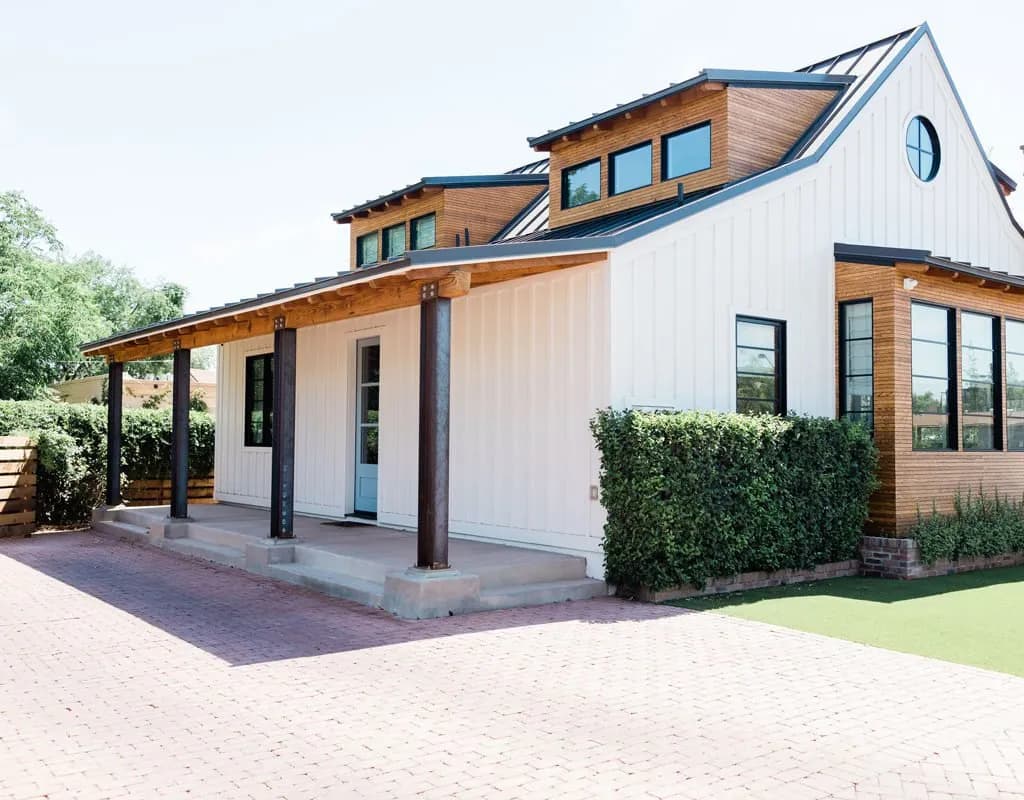
A well-built addition should look like it was always part of the home. For Hudson's predominantly 1980s housing stock, this means matching or complementing the architectural style and materials that define the community. The exterior elements we carefully match on every Hudson addition include:
- Roof pitch angle measured in rise over run (most Hudson homes use 4/12 or 5/12 pitches)
- Roofing material, color, and manufacturer (usually asphalt architectural shingles)
- Siding material and color (vinyl siding is most common on 1980s Hudson homes)
- Window style, frame color, and grid pattern
- Soffit and fascia dimensions and color
- Exterior trim profiles and paint colors
- Gutter style and downspout locations
- Driveway and walkway materials where the addition affects them
1980s vinyl siding profiles were standardized but color fading over decades means that even original-profile replacement siding may not exactly match the aged original. We discuss color matching during initial consultation and sometimes recommend repainting or re-siding the entire home after an addition is complete if exact matches are not available.
Foundation and Structural Integration for Hudson Additions
The foundation choice for Hudson additions depends on the type and size of the addition being built. Standard monolithic slab-on-grade foundations work for most Hudson additions because the existing homes use slab foundations and the new construction can tie into the existing foundation system effectively. Costs run $4,500 to $12,000 for addition foundations depending on size and any reinforcement needed at the tie-in point with the existing home.
Stem wall foundations may be appropriate for additions that need to match finished floor height of elevated existing homes or that require access underneath for plumbing or electrical. Stem wall foundations cost more ($8,000 to $20,000 for addition-sized applications) but provide specific advantages when the situation requires them.
For larger or more complex additions, structural engineering ensures the new construction properly supports its own loads and does not adversely affect the existing home. Engineering costs run $800 to $2,500 for typical addition projects. More complex projects with second-story additions or significant structural modifications require more extensive engineering and cost proportionally more.
Electrical Requirements for Hudson Additions
Adding new conditioned space to a Hudson home requires evaluating whether the existing electrical service has capacity to handle the additional load. Most 1980s Hudson homes have 100-amp electrical service that is already near capacity. Adding an addition with its own HVAC, lighting, outlets, and potentially a kitchen or bathroom can require upgrading to 200-amp service.
Panel upgrades typically cost $1,500 to $3,500 depending on the specific situation, whether the service entrance cable needs replacement, and whether any meter relocation is required. We evaluate panel capacity during the design phase and include any necessary electrical upgrades in the project scope so the addition operates properly without tripping breakers or creating safety issues.
New addition electrical work must meet current code requirements including GFCI protection in wet areas, AFCI protection on bedroom circuits, proper circuit sizing for modern loads, and adequate outlet spacing per current electrical code. All of this is standard practice for our Hudson addition projects.
Financing Hudson Home Additions
Hudson homeowners finance additions through several common approaches. Home equity loans or HELOCs offer competitive rates and tax-deductible interest for qualifying home improvements. They work well for additions over $50,000 where the interest savings justify the longer application process. Construction loans provide funds in stages as work progresses, converting to traditional mortgages when complete. These work for larger projects over $100,000 where staged funding matches construction milestones. Personal loans offer faster approval for smaller additions under $40,000 where speed matters more than lowest rates. Cash savings eliminate interest costs and provide the lowest total project cost.
For Hudson's retirement-heavy population, financing considerations often involve fixed-income budgeting where predictable monthly payments matter more than lowest total cost. We provide detailed cost estimates early in the design process so financing can be arranged with complete clarity about project scope before committing to construction.
Timeline for Hudson Home Addition Projects
From initial consultation through certificate of occupancy, Hudson home addition projects follow this typical timeline:
- Initial free consultation and lot evaluation (week 1)
- Design phase with architectural drawings and fixed-price estimate preparation (weeks 2 to 5)
- Structural engineering for permit documentation (weeks 3 to 6, overlapping with design)
- Permit application submission through Pasco County Accela portal (week 6)
- County plan review (15 to 30 business days for standard projects)
- Material procurement during permit review phase
- Site preparation and foundation work (weeks 11 to 13)
- Framing and roof construction (weeks 13 to 17)
- Mechanical rough-ins including electrical, plumbing, and HVAC (weeks 17 to 20)
- County inspections for rough-in work
- Exterior finishes including siding, roofing, and windows (weeks 20 to 23)
- Interior finishes including insulation, drywall, paint, flooring, and fixtures (weeks 22 to 28)
- Final inspections and walkthrough (week 28)
Total timeline varies from 10 weeks for simple screened porch additions to 28+ weeks for complex bedroom and bathroom additions or in-law suites. Simpler projects move faster through the timeline because they involve fewer trades and less permitting complexity.
Why Hudson Homeowners Choose Protech Construction for Additions
Our Brooksville office at 9035 Jayson Dr is approximately 25 minutes from most Hudson neighborhoods, making us one of the closer licensed general contractors serving this Pasco County community. We have completed numerous additions throughout Hudson and understand the specific characteristics of 1980s housing stock, the Pasco County permitting process, and the budget-conscious priorities of Hudson's demographic. As a Florida Certified Building Contractor (license CBC1268979), we hold full general liability and workers compensation insurance and stand behind every addition with a one-year workmanship warranty. Call (352) 710-5455 today or visit our Brooksville office at 9035 Jayson Dr to schedule your free on-site Hudson addition consultation with our experienced licensed construction team. There is absolutely no obligation and no cost whatsoever for the initial on-site visit or for the detailed written estimate that follows from our complete planning, design, structural engineering, and detailed scope evaluation consultation process for your specific Hudson home addition project.
Service Areas
General contracting across Central Florida
Licensed and insured construction services throughout Hernando, Pasco, and Citrus counties.
All Services
Every service Protech offers
By Area
Home Additions and related services near Hudson
FAQ
Frequently Asked Questions
How much do home additions cost in Hudson?
+
What is the 50 percent rule and does it apply to my Hudson addition?
+
Can I add an in-law suite to my Hudson home?
+
Will my existing HVAC handle a Hudson addition?
+
How long does a Hudson home addition take?
+
Do you handle Pasco County permits for Hudson additions?
+
From the Blog
Construction knowledge for Central Florida homeowners.
Screened Porch Additions in Florida: Real Costs for an Attached Screen Room, Not a Pool Cage
Three contractors can quote a screened porch $30,000 apart and all be honest, because they are pricing three different projects. Here is what a roofed screened porch addition really costs in Florida, where the roof tie-in decides the budget, and when a screen room is the better buy.
Read Article
Elevated and Piling Home Cost in Florida: 2026 Guide
The flood zone tells you how high the floor has to be. It does not tell you what that height costs, and the numbers floating around the internet are off by a factor of three. Stem wall runs about $5 per square foot over slab on grade. A complete piling foundation runs $50,000 to $90,000, which on a 2,400 square foot home is closer to $31 per square foot than the $100 to $150 figure commonly quoted. Here is the honest breakdown, foundation by foundation.
Read Article
Multigenerational Home Layouts in Florida: 6 Plan Moves
Nearly every production floor plan in Central Florida is a split-bedroom 3/2 designed for a nuclear family, and dropping three generations into it fails in predictable places: one shared wall, two bathrooms, one thermostat, and a great room that everyone has to walk through. Here are the six plan decisions that actually buy privacy, what each one adds to a build budget, and the single line in Florida statute that turns a suite into a second dwelling unit.
Read ArticleReady to Build?
Get your free evaluation today.
No-pressure consultation. We serve Hernando, Pasco, and Citrus counties. Call us now or request a visit online.